6 Best Heated Water Hose for RV for Winter Camping
For most buyers, the best heated water hose for rv is the Heated Water Hose for RV, 30 ft, mainly because its 30-foot reach fits many campground hookups without an extension. That extra length can make winter setup easier when the spigot sits several steps from the RV.
This guide is for RV owners who need a drinkable water supply during freezing weather, from short weekend trips to longer stays. The key details are hose length, drinking-water-safe materials, heating power, and the cord’s reach to an outlet. A longer hose adds flexibility, but it can take more room to store. Strong insulation also matters because cold spots can form near fittings and exposed connections. The six picks below are ranked with clear reasons, practical differences, and honest drawbacks for each, so you can match the warmer to your campsite and travel plans.
Quick Comparison
| # | Product | Best For | Price | |
|---|---|---|---|---|
| 1 | Heated Water Hose for RV, 30 ft | Long-drive RV campers | ~$90 | View → |
| 2 | Camco 25-Ft Heated Water Hose | Compact campsite setups | ~$118 | View → |
| 3 | 50FT Heated RV Water Hose | Distant water hookups | ~$130 | View → |
| 4 | OEBLD Heated Water Hose for RV | Cold-weather RV travelers | ~$73 | View → |
| 5 | Heated Water Hose for RV | General winter camping | ~$90 | View → |
| 6 | Camco 22912 Heated Water Hose | Camco product loyalists | ~$210 | View → |
6 Heated RV Hoses Worth Considering
The list is ranked by heating performance, cold-weather protection, durability, and value, counting down to the top pick.
6. Camco 22912 Heated Water Hose

Best for: Cold-weather RV campers with hookups
The Camco 22912 is a 50-foot heated drinking-water hose for RVs, livestock areas, kennels, and outdoor water connections. Its 5/8-inch inside diameter supports a standard-size water line, while the integrated heater helps protect the supply from freezing down to -20°F. The hose uses NSF/ANSI 61-certified material and is free of lead, BPA, and phthalates.
A thermostat controls the heating cable, so it runs only when needed instead of heating continuously. The 120-volt system connects through a 6-foot power cord with an LED indicator plug. Camco also lists CSA certification for lead-free content under NSF/ANSI 372. It is made in the USA with global materials and costs around $210, so this is a specialized purchase rather than a basic replacement hose. The long reach suits larger RV sites, but the length can be unnecessary for short connections.
Pros
- Protects the water line from freezing down to -20°F.
- Uses drinking-water-safe, lead-free material with NSF/ANSI certifications.
- Thermostat-controlled heating can reduce unnecessary power use.
Cons
- Requires a nearby 120-volt electrical outlet to provide freeze protection.
- Around $210, it costs far more than an unheated 50-foot hose.
5. Heated Water Hose for RV
Best for: Winter RV hookups and outdoor water use
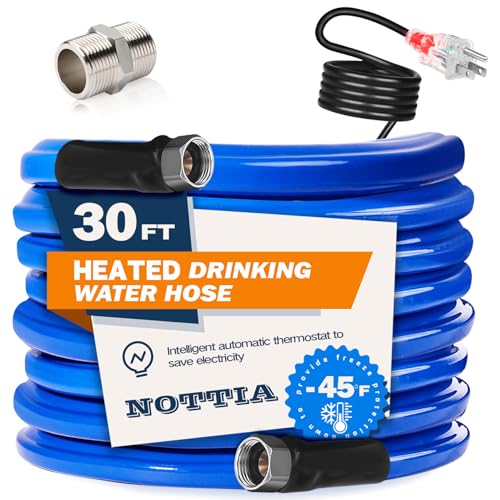
This 30-foot heated water hose is designed to keep water moving in freezing weather. The listed freeze protection reaches down to -45°F, or -42.7°C. An external thermostat adjusts heat output as temperatures change, while overload protection is intended to reduce overheating risks. The hose uses lead-free, BPA-free material for drinking-water applications. It can fit RVs, campsites, gardens, homes, and livestock areas. At around $90, it costs more than a standard garden hose, but cold-weather users may find the added protection useful.
The hose stands out for its broad use range and long service promise. The manufacturer lists a three-year service period and 24/7 customer support. It also provides installation instructions and videos, which may help with setup. The heating system is automatic, so users do not need to manage heat settings manually. Still, the listing does not provide a power-consumption figure, outlet requirements, or details about connector sizes. Those missing specifications matter for RV owners planning a permanent setup. The hose should also be placed near a suitable electrical outlet and protected from physical damage.
Pros
- 30-foot length reaches many RV and outdoor water connections.
- Listed protection down to -45°F helps limit freezing.
- Lead-free, BPA-free hose material suits drinking-water use.
Cons
- Requires electricity, so it cannot work during an outage or away from an outlet.
- The listing does not state wattage, connector dimensions, or expected energy cost.
4. OEBLD Heated Water Hose for RV

Best for: Winter RV hookups in freezing climates
The OEBLD Heated Water Hose is a 30-foot, 5/8-inch hose made for RVs, campers, and trailers. Its built-in heater helps keep water moving in temperatures down to -45°F. A thermostat switches on at 47°F and shuts off at 60°F, which limits heating when conditions improve. The hose costs around $73, though prices can change.
Its outer layer combines PVC coating with braided polyester for added resistance to abrasion, UV exposure, and cold-weather cracking. The 3/4-inch GHT fittings use rubber gaskets and sealing tape to reduce leaks, while a sealed thermostat and LED indicator support outdoor use. The hose is BPA-free and lead-free, and the company lists UL62368-1, SGS, and FCC certifications. A three-year warranty adds some purchase support. Its flexibility should help with setup and storage, but 30 feet still takes room to coil.
Pros
- Automatic heating supports water flow in temperatures as low as -45°F.
- A 5/8-inch inner diameter provides a useful balance of flow and flexibility.
- BPA-free, lead-free materials suit drinking water use in an RV.
Cons
- It needs access to electrical power, so it cannot protect water lines at remote sites without an outlet.
- The 30-foot length may be excessive for short hookups and takes more storage space than a compact hose.
3. 50FT Heated RV Water Hose

Best for: RV owners camping through freezing winters
This 50-foot heated water hose is made for RV fresh-water hookups, winter camping, gardens, and other outdoor water lines. Its built-in heating system is rated to protect water flow in temperatures as low as -45°F. A self-regulating external thermostat controls the heat instead of running at one constant level. The hose gradually thaws frozen sections, which can help restore flow without manually warming the entire line.
The hose has a protective outer jacket around the heated line and water passage. The manufacturer says the material will not add a plastic taste or leach harmful elements into drinking water. Two washers, one at each end, are included to reduce leaks at the fittings. Installation instructions and videos are available, and the seller lists 24/7 support with a three-year service period. At around $130, it costs much more than a standard garden hose, but winter RV users may find the built-in heating more practical than adding separate heat tape.
Pros
- 50 feet provides useful reach between an RV and distant hookups.
- Self-regulating heat is designed for temperatures down to -45°F.
- Double washers help limit leaks at both hose connections.
Cons
- Around $130 makes it a costly choice for occasional winter use.
- It needs access to electrical power, so it may not suit remote campsites without a usable outlet.
2. Camco 25-Ft Heated Water Hose

Best for: Winter RV hookups in freezing climates
The Camco 25-foot heated water hose supplies drinking water to an RV, livestock setup, or home faucet during cold weather. Its 5/8-inch inside diameter supports common RV water connections, while the NSF/ANSI 61 hose material is free of lead, BPA, and phthalates. The hose provides freeze protection to -20°F, or -28°C, when connected to power.
What sets this model apart is its thermostat-controlled heating cable. It runs from a 120-volt outlet and uses an 18-gauge, 6-foot power cord with an LED indicator plug. The heater activates only when needed, which can help limit energy use compared with constant heating. Machined fittings resist corrosion, and the outer jacket protects the water line during outdoor use. Camco makes the hose in the USA with global materials. CSA lead-free certification under NSF/ANSI 372 adds another useful check for potable-water use. Expect to pay around $118, though prices change.
Pros
- Protects the water line down to -20°F in freezing conditions.
- Uses NSF/ANSI 61 material that is lead-, BPA-, and phthalate-free.
- Thermostat control reduces unnecessary heating, and the LED plug shows power status.
Cons
- It needs a 120-volt outlet, so it is not suitable for unpowered campsites.
- The fixed 25-foot length may not fit compact setups or hookups located farther away.
1. Heated Water Hose for RV, 30 ft

Best for: Winter RV water hookups
This electrically heated RV hose is designed to keep water moving in freezing weather. The listed 30-foot model also appears in a 15-foot size. An external, self-regulating thermostat adjusts the heat as temperatures fall, with protection rated down to -45°F. That makes it suitable for RV hookups, campsites, gardens, farms, chicken coops, and other outdoor water connections.
The hose has a protective outer jacket around the heated line and electrical system. Double washers at both ends help reduce leaks during installation. Instructions and setup videos are included, which should help buyers connect the hose correctly. The product is advertised as not leaving a plastic taste or harmful elements in the water, though water quality also depends on the source and fittings. Around $90, it costs more than a standard drinking-water hose. The seller lists 24/7 customer support and three years of service coverage.
Pros
- Self-regulating heat helps prevent freezing down to -45°F.
- A 30-foot length can reach distant RV or outdoor connections.
- Double washers help limit leaks at both hose ends.
Cons
- It needs access to electrical power, which may be difficult at remote campsites.
- The heated design costs more and requires extra storage space compared with a regular hose.
Buying Guide
The most important factor is reliable freeze protection. A hose that maintains water flow near 32°F can prevent frozen sections, cracked fittings, and costly replacements during cold-weather camping.
- Temperature control: Choose a model with an automatic thermostat that activates around 35°F to 45°F and shuts off near 50°F to 60°F. Manual-only heating requires closer monitoring.
- Potable-water safety: Look for lead-free materials and certification for drinking water, such as NSF or FDA compliance. Avoid hoses labeled only for irrigation or utility use.
- Length and diameter: Match the hose to your campsite connection. Common lengths include 25, 50, and 75 feet, while 5/8-inch interiors usually provide better flow than 1/2-inch versions.
- Power and weather protection: Check the electrical draw before buying. A 50-foot hose may use about 300 to 400 watts, so confirm your RV outlet and extension cord can handle the load. A weather-resistant plug and sealed controller add protection.
- Fittings and storage: Prefer brass or reinforced fittings with strain relief at both ends. A price range of $70 to $160 is common for 25- to 50-foot heated hoses, and flexible storage matters below 25°F.
If you cannot prioritize everything, choose dependable thermostat control and freeze protection first.
Frequently Asked Questions
How does a heated RV water hose prevent freezing?
A heated RV water hose prevents freezing by warming the water line when outside temperatures drop below freezing. Most models use an internal heating cable and insulation, then connect to a 120-volt outlet. Choose a thermostat-controlled hose rated for your water pressure, and keep both fittings protected from wind.
What length of heated water hose should an RV owner buy?
The right heated water hose length depends on the distance from the campground spigot to your RV inlet, with 25 feet fitting many sites. Measure that route first, then add 3 to 5 feet for bends and connection slack. Avoid extra length, since unused hose costs more and takes longer to drain.
Can a heated drinking-water hose stay connected all winter?
Yes, a heated drinking-water hose can stay connected through winter if it is rated for continuous use and protected from damage. Check the manufacturer’s low-temperature range, inspect fittings often, and unplug it before storage. A 25-foot model may draw power for months, so use a weather-safe outlet with ground-fault protection.
Are heated RV hoses safe for drinking water?
Yes, heated RV hoses are safe for drinking water only when the product is labeled for potable water use and uses lead-free materials. Confirm the hose carries a drinking-water rating before buying. A heated utility hose may prevent freezing but still be unsuitable for filling a fresh-water tank.
Conclusion
Heated Water Hose for RV, 30 ft, is the top recommendation for campers who need winter water service with enough reach for most campsite hookups. If your priority is a lower price or a shorter connection, choose a shorter heated drinking-water hose instead, since it can reduce storage space and cost. Before buying, double-check the hose size, your RV and campground connection compatibility, the package quantity, and the current price, since listings can change and some kits include fittings while others do not. A properly matched hose can make cold-weather setup easier, but the right length and fittings matter most. Keep the purchase aligned with your RV’s water system and travel plans.